



Chicago Rockford International Airport
From Regional Airport to Global Logistics Engine
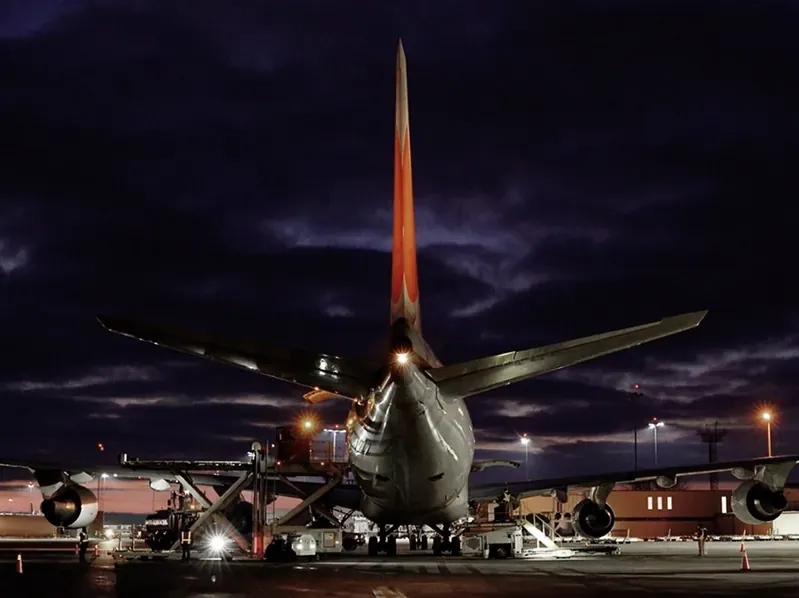
Chicago Rockford International Airport’s rise from a modest regional facility to one of the world’s fastest-growing air cargo airports is more than just an aviation business success story. It is a case study in how coordinated leadership, workforce investment and long-term economic strategy can transform a region’s future.
As global supply chains shifted and advanced logistics became a defining economic force, Rockford made a deliberate choice: in addition to pursuing passenger scale, RFD would grow by aligning infrastructure, education and industry around a shared vision of air cargo competitiveness. The result is a bustling airport that connects Rockford directly to global commerce and anchors one of the region’s most powerful and resilient economic engines.
What
Over many decades and under the leadership of executive directors William C. Grady, Fred Ford, Bob O’Brien, Mike Dunn, Sr. and now Zack Oakley, Chicago Rockford International Airport devised and continues to refine a business strategy centered on air cargo logistics, operational excellence, convenience and reliability. While recognizing the immense gravitational pull of nearby O’Hare International Airport, RFD has deliberately leveraged its own strengths—uncongested airspace, available development land, efficient operations and strategic access to interstate highways and rail networks. The strategy has positioned Rockford as a critical stand-alone node within the broader Midwest logistics corridor.
Just as importantly, RFD’s evolution has not happened in isolation. It has unfolded alongside a broader regional strategy to position the Rockford Region as a competitive logistics corridor—one that carefully connects air cargo with highway, rail and distribution infrastructure. Already, investments along key freight corridors, including large-scale logistics and fulfillment centers along with new industrial development sites have leveraged the airport’s growing capacity and reinforced Rockford’s role in the modern global supply chain. In this way, RFD is both a driver and a beneficiary of a coordinated regional approach: aligning land use, transportation networks and workforce development around a shared economic purpose.
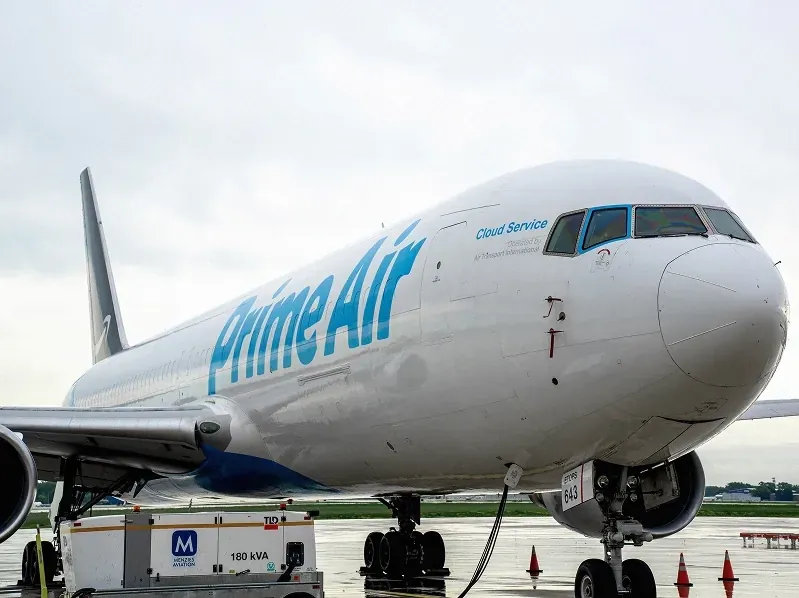
Major global logistics operators recognized RFD’s advantages. Companies such as UPS and Amazon Air established major cargo operations at the airport, bringing consistent aircraft movements, long-term infrastructure investment and thousands of jobs tied directly to global freight flows. Their presence provided the kind of stability and scale that has helped transform the airport from a promising strategy into a proven logistics platform.
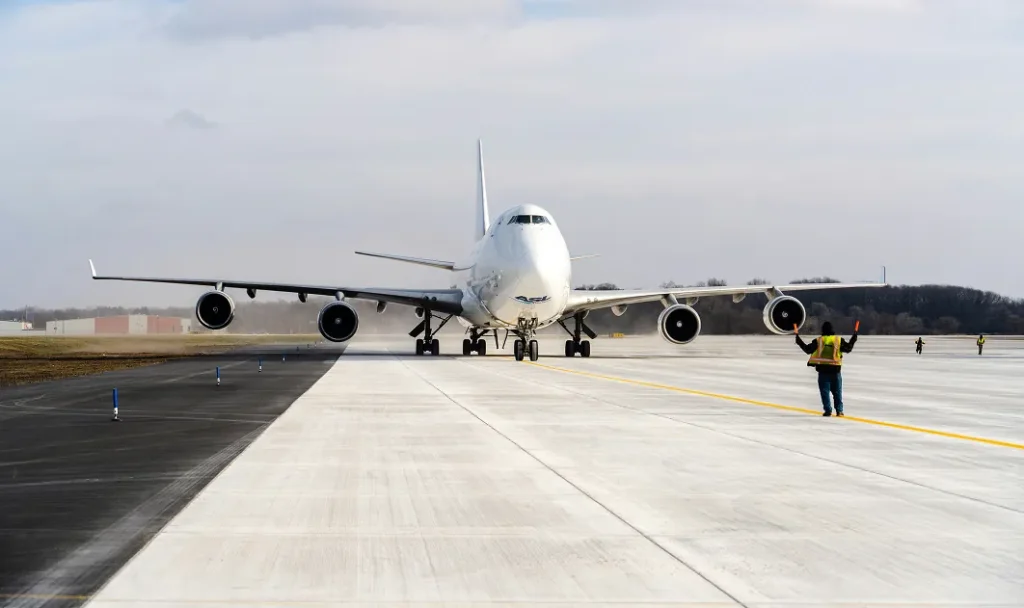
Photo by Jeremy Bishop on Unsplash
As that new platform matured, additional global companies followed. Investments by DSV, Maersk Air Freight Services and Menzies Aviation—alongside specialized operators like Emery Air—further expanded RFD’s capabilities and reputation, reinforcing its role as a trusted and increasingly sophisticated player within the global logistics network.
With operational flexibility, room to expand and direct interstate access, RFD leaned into what it could do better than larger, more crowded hubs, including O’Hare. Long cultivated by RFD through persistent direct outreach, major air cargo companies like Senator International (now Maersk) and several MRO (maintenance, repair and overhaul) operators began to test Rockford’s advantages.
A pivotal moment came when AAR, a global aircraft maintenance, repair and overhaul firm, committed to building a major MRO facility on the field at RFD. That decision was not driven by runway length or technical specifications alone. It was driven by people working together toward a shared vision.
Realizing the workforce demands of such an operation, Rockford’s institutions moved quickly and in unison. Rock Valley College partnered with industry and government leaders to stage an Aviation Maintenance and Powerplant (A&P) mechanic training program directly at RFD, aligning classroom instruction with real aircraft, real schedules and real employer needs. For students, training at RFD meant stepping directly into the environment they were preparing to enter at an active airport. For employers, the benefit was equally clear: a pipeline of mechanics trained to industry standards, familiar with airport operations and ready to contribute on day one. Remarkably, the graduates feed into much more than just airport operations jobs. Many accept positions at Rockford’s aerospace design and manufacturing companies such as GE, Woodward and Collins.
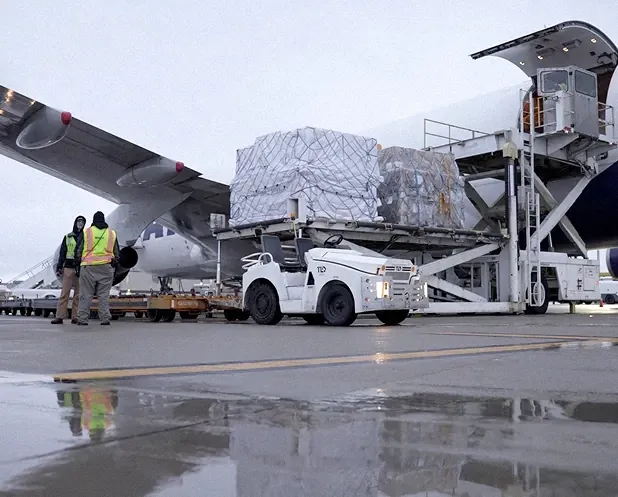
Image courtesy of GrahamSpencer
Over decades, local, state and federal partners supported RFD’s multi-faceted transformation through coordinated infrastructure and workforce investments totaling hundreds of millions of dollars and reinforcing a long-term commitment to logistics, aviation and skilled workforce growth.
The result is a durable ecosystem linking education, employment and global logistics—complemented by a willingness to rethink passenger access as well. Innovations such as Landline, RFD’s integrated ground-to-air service with American Airlines, demonstrate the same innovative mindset: meet travelers where they are, leverage nearby assets and solve problems creatively.
Together, these efforts reflect an airport—and a community—focused on strategic alignment. And that is to say nothing of RFD’s targeted air passenger travel successes, which is a story for another day.
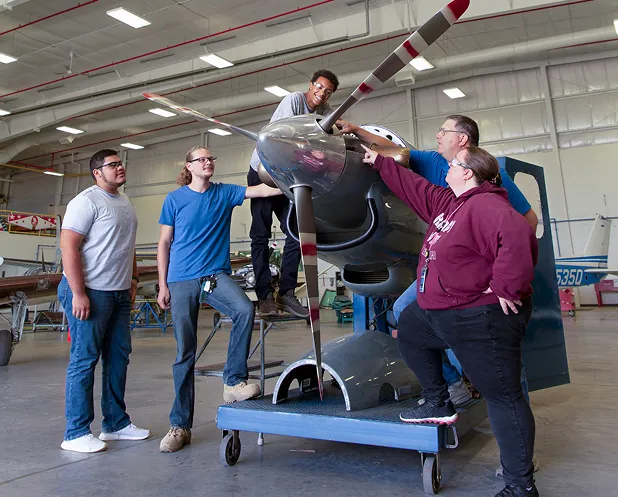
Image courtesy of GrahamSpencer
I’m proud of what RFD has become. The airport’s success is the community’s success—and it reflects years of hard work and close collaboration between local leaders, airport professionals and state and federal partners like the FAA. It proves that, sometimes, the sky is the limit when partners share vision and commitment.
Where
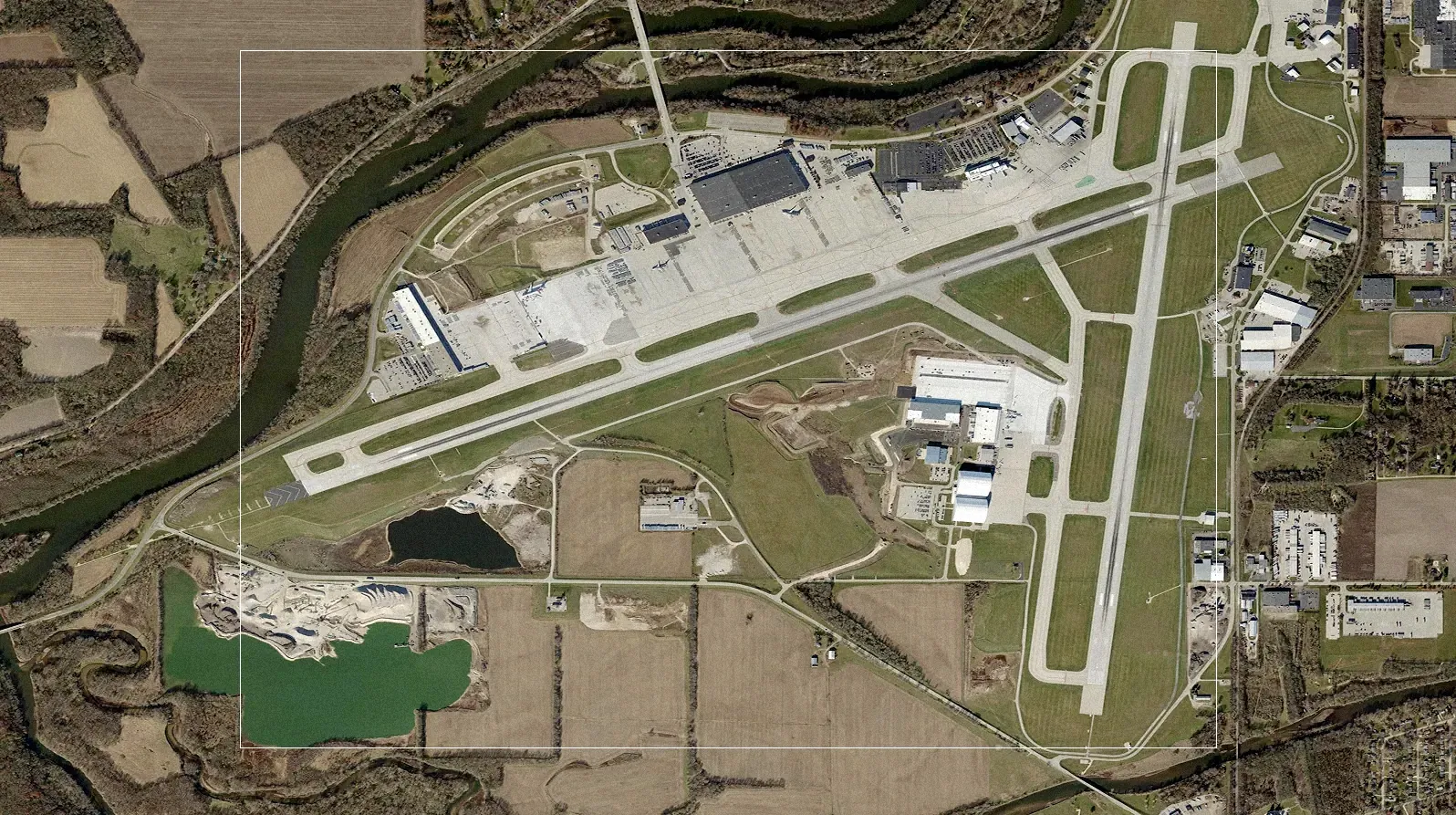
The presence of anchor cargo operators like UPS and Amazon Air brings stability to the airport and to the regional economy. Their investment signals that Rockford is a trusted part of the global logistics network.